Reefer cargo isn’t just any commodity stuffed into a container. If you’re using a reefer, it means that your goods are probably perishable, extremely sensitive, or possibly have a higher value than most other commodities. That’s why we stress the importance of special cargo handling for reefers.
Hapag-Lloyd container depots ensure that reefer boxes are clean and in sound condition upon release for a new transport.
In the interest of exercising best cargo care, we appreciate observation of the following recommendations:
Prior to stuffing
- Ensure only clean reefer container is accepted from depot
- Observe the use of adequate packaging material
- Keep in mind plastic wrapping may act as vapor barrier and prevent air circulation around the product
- Ensure your product temperature reflects transport temperature before stuffing commences
- Your reefer cargo should preferably be sourced from a refrigerated loading bay
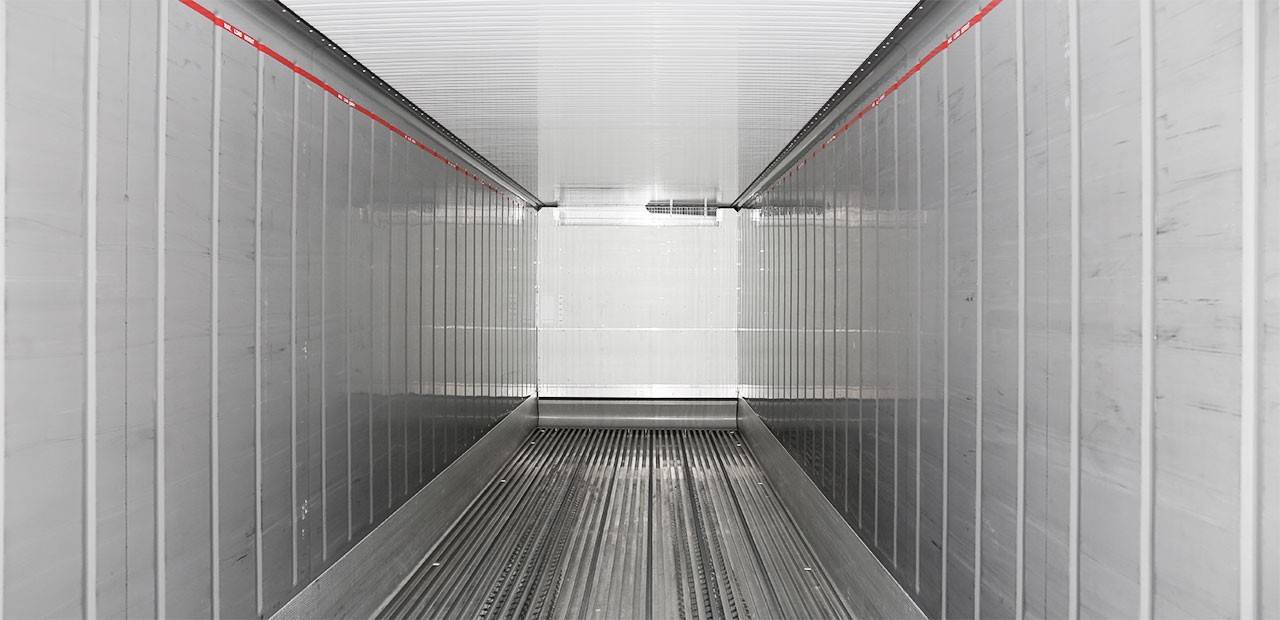
Stuffing of reefer containers
- Switch off the power unit during loading operation to avoid ambient air exchange
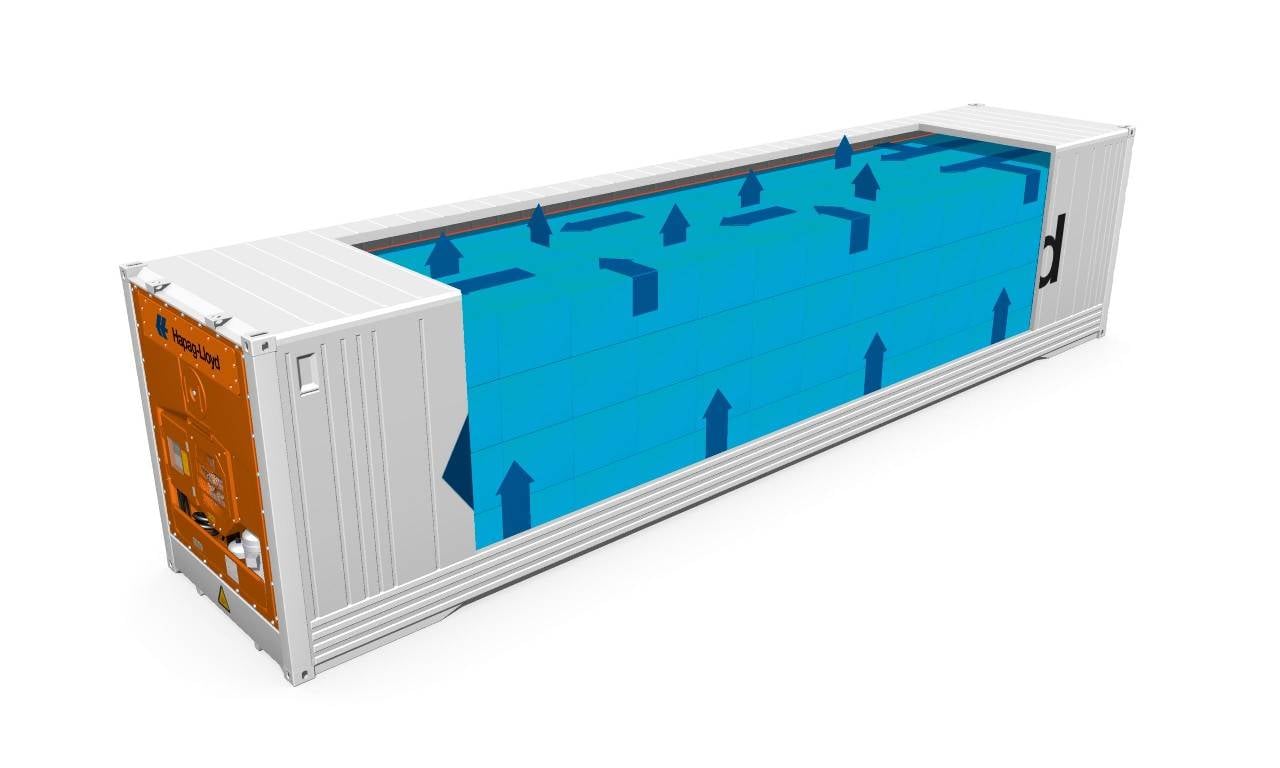
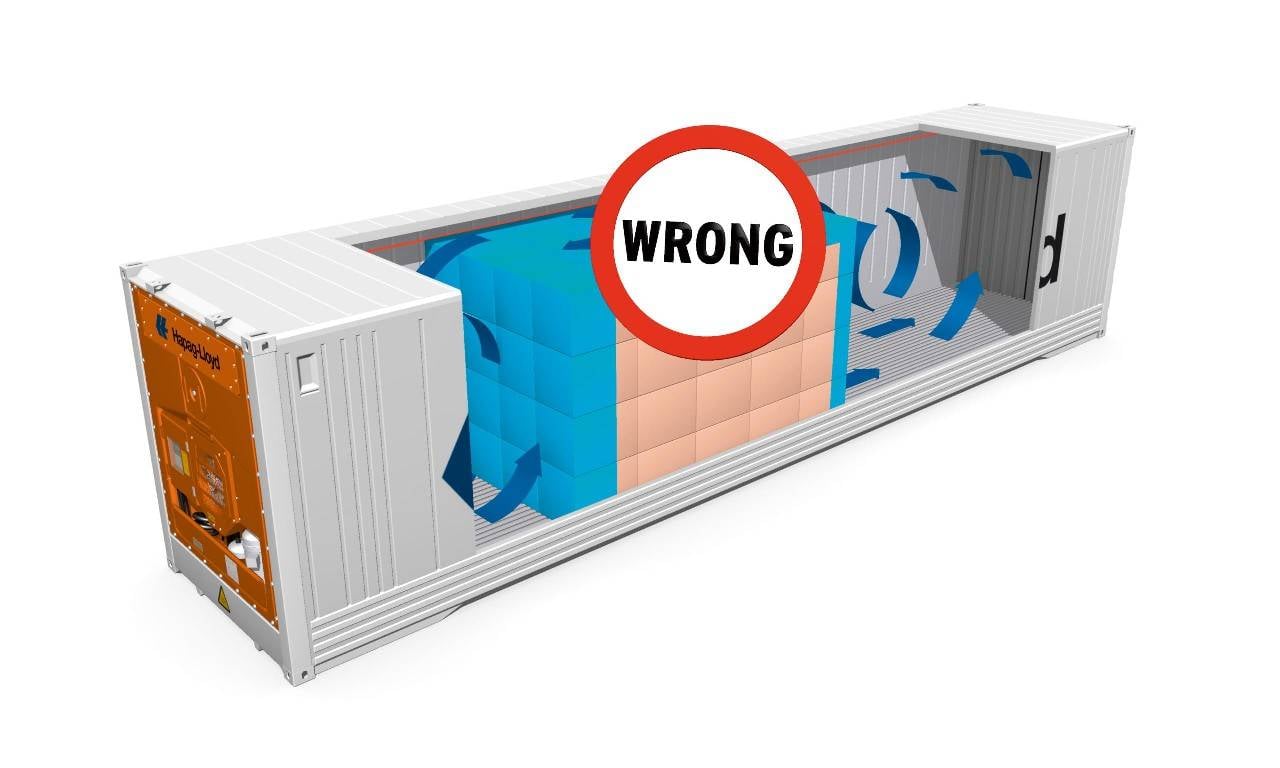
- Ensure product is evenly stuffed in correct manner to avoid obstructions that can result in hot spots
- Do not stack boxes above load line; spacers will help to stabilize cargo and ensure optimal airflow
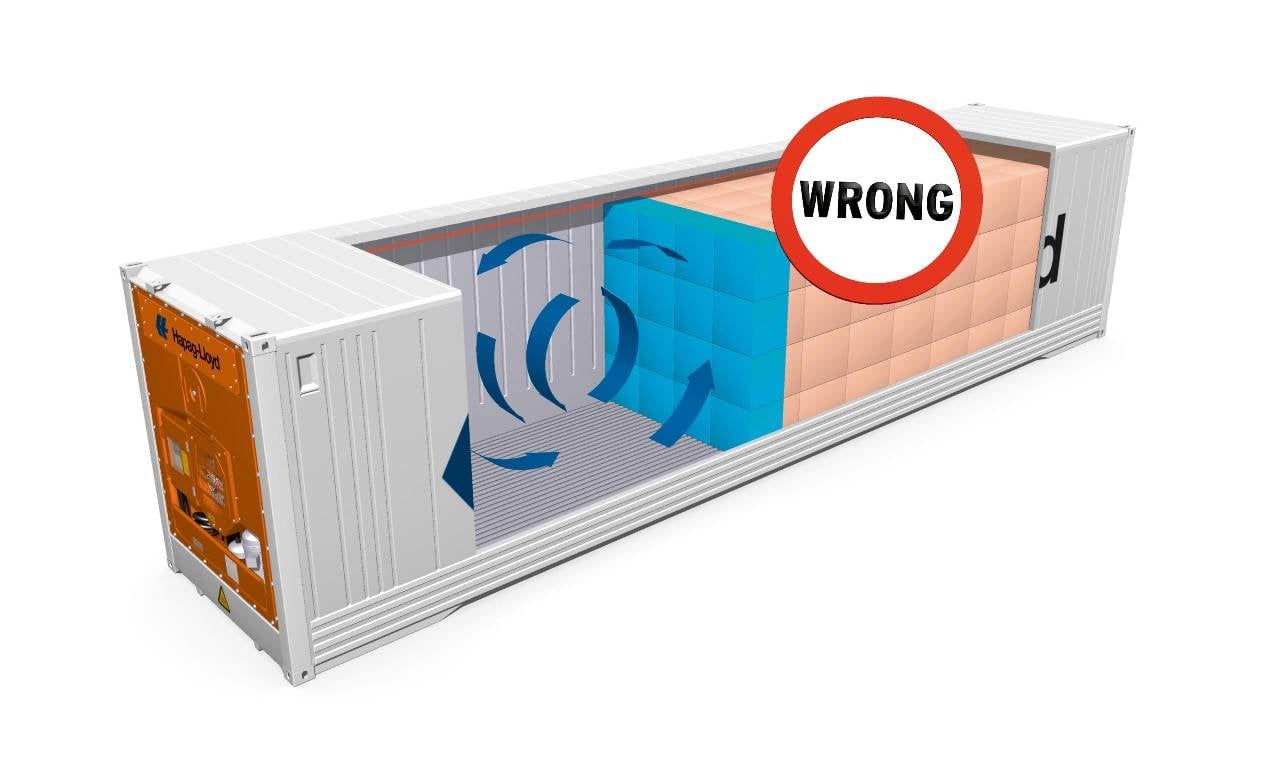
- Avoid poor air circulation which is amongst primary causes of product deterioration
- Any free floor area and gaps may not exceed 5% of floor area to avoid negative impact on airflow
- Use board or dunnage material to avoid gaps and open floor areas
- Do not load cargo beyond surface provided by "T-Bar" flooring inside the container
- To ensure free airflow, no space between cargo units permitted in front of unit air distribution point
- Adequate refrigeration relies on good air circulation around your entire load
Completing loading operation
- Close doors properly
- Ensure correct set point for carrying temperature, humidity and setting of air ventilation
- Start up reefer power unit